Posts

INTERACTIVE NOTEBOOK: Traditional Wisdom for Daily Living.

Image
Consult, engage in dialogue, and learn from Masonic researchers, almost like asking them directly and in your own language. ( Click here)      With artificial intelligence resources, the California Hispanic and Latin American Research Lodge connects you with the teachings of the great 19th-century Masonic monitors so you can analyze and apply them to the challenges of modern life. Historical Masonic Monitors Archive (Webb, Mackey, Preston & Fenton)      In this INTERACTIVE NOTEBOOK, ask questions directly through the foundational works of Thomas Smith Webb, Albert G. Mackey, William Preston, James Fenton, and C. G. Emrick. Converse and explore in depth the moral symbolism, lectures, and working tools of the three symbolic degrees (Entered Apprentice, Fellow Craft, and Master Mason). Discover in a practical way how to apply these teachings and virtues in your work, your life, your personal and family growth, as well as to achieve better service and perfo...

CUADERNO INTERACTIVO: Sabiduría Masónica Tradicional para tu Vida Diaria

Image
Consulta, dialoga y aprende de los investigadores masones, casi como preguntárselo directamente a ellos y en tu idioma. (Click Aqui)      Con los recursos de inteligencia artificial, California Hispanic and Latin American Research Lodge te conecta con las enseñanzas de los grandes monitores masónicos del siglo XIX para que los analices y apliques con los retos de la vida moderna.   Archivo Histórico de Monitores Masónicos (Webb, Mackey, Preston & Fenton)     En este  CUADERNO INTERACTIVO pregunta directamente a través de las obras fundamentales de Thomas Smith Webb, Albert G. Mackey, William Preston, James Fenton y C. G. Emrick. Conversa y explora a profundidad el simbolismo moral, las lecturas y las herramientas de trabajo de los tres grados simbólicos (Aprendiz, Compañero y Maestro Masón). Descubre de forma práctica cómo aplicar estas enseñanzas y virtudes en tu trabajo, tu vida, tu crecimiento personal y familiar, así como para lograr un mejor d...

132º Aniversario del Fallecimiento de V.H. Andrés Cassard (3 de febrero de 1894)

Image
V.H. Andrés Cassard (3 de febrero de 1894) Padre de la Masonería Regular Cubana y Fundador de la Gran Logia de Cuba El 3 de febrero de 1894, en la ciudad de Nueva York, pasó a la Gran Logia del Eterno el distinguido masón Venerable Hermano Andrés Cassard . Hoy, a 132 años de su partida, su legado continúa iluminando la historia de la Masonería cubana y de la tradición masónica en las Américas. Cassard ocupa un lugar singular en la historiografía masónica. Nacido en el Caribe y posteriormente establecido en los Estados Unidos, se convirtió en un puente entre culturas, ritos y obediencias masónicas en un período de profundas transformaciones políticas y sociales. Su rigor intelectual, su visión organizativa y su compromiso inquebrantable con la regularidad lo posicionaron como uno de los masones más influyentes del siglo XIX. Su contribución más perdurable fue la creación de la Gran Logia de Cuba , institución concebida bajo los principios de regularidad, soberanía y apego a los Anti...

132nd Anniversary of the Passing of V.H. Andrés Cassard (February 3, 1894)

Image
  V.H. Andrés Cassard (3 de febrero de 1894) Father of Regular Cuban Freemasonry and Founder of the Grand Lodge of Cuba On February 3, 1894, in the city of New York, the distinguished Freemason Venerable Hermano Andrés Cassard passed to the Eternal Lodge. Today, 132 years later, his legacy continues to illuminate the history of Cuban Freemasonry and the broader Masonic tradition of the Americas. Cassard occupies a unique place in Masonic historiography. Born in the Caribbean and later established in the United States, he became a bridge between cultures, rites, and Masonic obediences during a period of profound political and social transformation. His intellectual rigor, organizational vision, and unwavering commitment to regularity positioned him as one of the most influential Masons of the 19th century. His most enduring contribution was the creation of the Grand Lodge of Cuba , an institution conceived under the principles of regularity, sovereignty, and adherence to the An...

CITLALI/CITLALICUE: THE GODDESS OF THE STARS

Image
      Citlali/Citlalicue is an important deity in Aztec mythology, associated with stars and the Milky Way. Her name means "she of the skirt of stars" or "star of life". According to mythology, she created the stars along with her husband Citlalatonac and is credited with the creation of the universe and humanity. Characteristics and Attributes Goddess of stars and the Milky Way Associated with fertility, life, and death Depicted with a star-studded skirt and celestial symbols Considered a mother and protector of humans Linked to Aztec cosmogony and the creation of the universe Importance in Aztec Mythology    Citlali/Citlalicue  plays a vital role in Aztec mythology, credited with creating the stars and the Milky Way. Her influence extends to fertility, life, and death, making her a crucial deity in the Aztec worldview . Representation in Culture    The goddess Citlali/Citlalicue has been depicted in various works of art and literature, and her ...

CITLALI/CITLALICUE: LA DIOSA DE LAS ESTRELLAS

Image
      Citlali/Citlalicue es una deidad importante en la mitología azteca, asociada con las estrellas y la Vía Láctea. Su nombre significa "la de la falda de estrellas" o "estrella de la vida". Según la mitología, creó las estrellas junto a su esposo Citlalatonac y se le atribuye la creación del universo y la humanidad. Características y Atributos Diosa creadora de las estrellas y la Vía Láctea Asociada con la fertilidad, la vida y la muerte Representada con una falda de estrellas y símbolos celestes Considerada una madre y protectora de los seres humanos Vinculada a la cosmogonía azteca y la creación del universo Importancia en la Mitología Azteca    Citlali/Citlalicue desempeña un papel fundamental en la mitología azteca, ya que se le atribuye la creación de las estrellas y la Vía Láctea. Su influencia se extiende a la fertilidad, la vida y la muerte, lo que la convierte en una deidad crucial en la cosmovisión azteca. Representación en la Cultura    ...

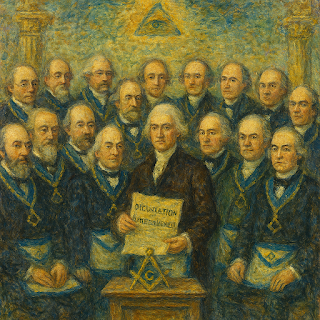
Les francs-maçons du 4 juillet selon des styles picturaux célèbres - Par Copilot

Image
Maçons Signataires de la Déclaration d'indépendance des États-Unis (1776)     P armi les 56 signataires de la Déclaration d’indépendance des États-Unis, au moins 18 étaient des francs-maçons connus. La franc-maçonnerie a influencé les idéaux révolutionnaires de liberté, d’égalité et de fraternité. Certaines sources avancent jusqu’à 52 signataires, mais cela reste sujet à débat . 📜 F rancs-maçons identifiéns Benjamin Franklin,  John Hancock, Thomas Jefferson, Samuel Adams, John Adams, William Ellery, Elbridge Gerry, Lyman Hall, Joseph Hewes, William Hooper, Robert Treat Paine, John Penn, George Read, Roger Sherman, Richard Stockton, George Walton, William Whippl e. P eintures de Copilot AI générées par des styles picturaux de: Monet, Van Gogh, Picasso y Frida Kahlo Monet Van Gogh Picasso Frida Kahlo Contenu généré par: